New Construction Electrical Services in Shelby Township
Systems Designed Before Walls Close
Electrical system installation in new construction happens in phases coordinated with framing, insulation, and finishing trades, starting with underground service entrance conduit before the foundation pour and ending with fixture installation and final trim after drywall completion. MJM Electric Inc works on new construction projects across Shelby Township, planning electrical layouts during design phases to locate panels where they provide convenient circuit routing, positioning outlets and switches based on furniture placement and lighting needs, and roughing in wiring before walls close to avoid costly modifications later. Proper planning during early construction stages prevents situations where insufficient circuits require panel upgrades or poorly placed outlets force occupants to rely on extension cords.
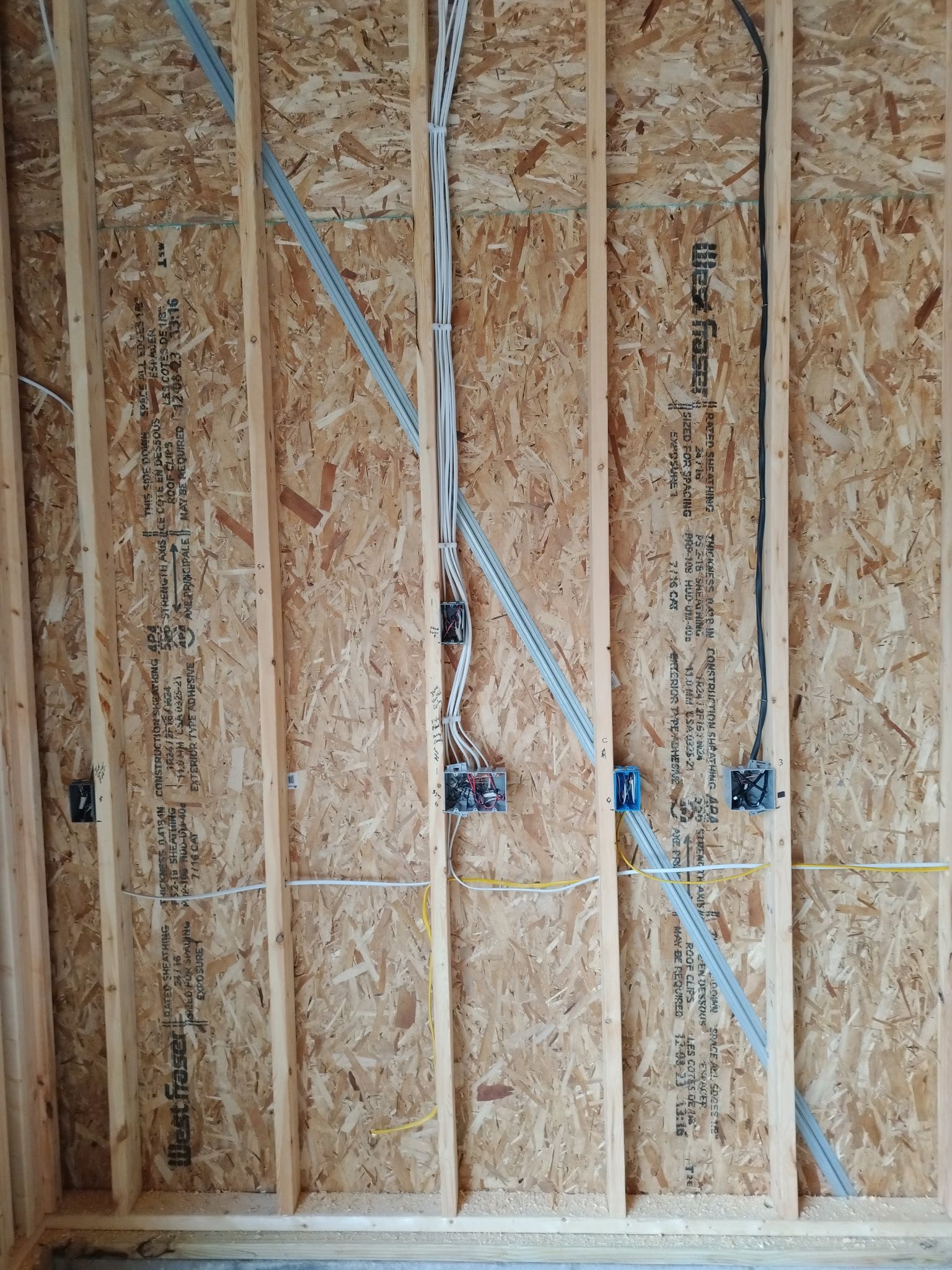
The rough-in phase involves installing electrical boxes, running cables through studs and joists to connect circuits from the panel to each outlet and fixture location, and coordinating with HVAC and plumbing trades to route wiring around ductwork and pipes. Code compliance includes proper box fill calculations, correct wire gauges for circuit amperage, and securing methods that prevent cable damage during insulation installation.
Arrange a project consultation to review building plans and coordinate electrical system design with your construction timeline.
What Changes After Electrical Rough-In Completes
New construction electrical work follows inspection schedules that verify rough-in wiring before drywall installation covers the work, then final inspections after devices and fixtures are installed and energized. The rough-in includes all cable runs, junction boxes, and panel connections with wiring labeled to identify which circuits serve which areas, allowing electricians to return after finishing trades complete their work and connect switches, outlets, and light fixtures efficiently.
Once construction finishes and the electrical system energizes, every room has properly located outlets that eliminate extension cord use, lighting circuits control fixtures from convenient switch locations, and dedicated circuits serve high-draw appliances without overloading shared circuits. The electrical panel includes labeled breakers that clearly identify which circuits they protect, with spare breaker positions and service capacity sized to accommodate future additions like EV chargers or workshop equipment without requiring panel replacement.
New construction allows for electrical system design that anticipates future needs rather than adapting to existing wiring constraints, including structured wiring for data and communications, whole-house surge protection integrated at the main panel, and circuit layouts that balance electrical loads across both phases of the service entrance to prevent voltage imbalances. These design considerations create electrical systems that support modern electrical demands and remain adaptable as technology changes.
Questions Before Starting Your Project
Builders and property owners beginning new construction projects in Shelby Township typically need information about planning, coordination, and code requirements before electrical work starts.
What electrical details need to be finalized before framing begins?
Outlet and switch locations, lighting fixture positions, and appliance locations must be determined so electrical boxes can be installed at correct heights and positions before wall cavities close, since relocating boxes after drywall installation requires cutting and patching.
How does electrical rough-in coordinate with other construction trades?
Electricians typically rough in wiring after framing and exterior sheathing are complete but before insulation installation, working around HVAC ductwork and plumbing pipes that occupy the same stud and joist cavities where electrical cables run.
What electrical capacity should new residential construction include?
Most new single-family homes install 200-amp electrical service to handle modern electrical loads including central air conditioning, electric vehicle charging, and multiple high-draw appliances operating simultaneously without overloading the system.
How many outlets does code require in new construction rooms in Shelby Township?
Residential building code requires outlets spaced so no point along any wall is more than six feet from an outlet, preventing excessive extension cord use, with additional requirements for kitchen countertop spacing and bathroom GFCI protection.
When does the electrical system receive inspection and approval?
Rough-in inspection occurs before insulation and drywall installation to verify proper wiring methods and box installation, followed by final inspection after all devices and fixtures are installed and the system is energized to confirm everything operates correctly and safely.
MJM Electric Inc provides electrical planning and installation for new construction projects from initial design consultation through final inspection. Request a project estimate based on your building plans and construction schedule to establish accurate electrical costs.