EV Charger Installation in Shelby Township
Home Charging Built Into Your Electrical System
Electric vehicle charging at home requires a dedicated 240-volt circuit similar to what powers a clothes dryer or electric range, but with specific amperage and outlet configurations that match your vehicle's charging capacity. MJM Electric Inc installs Level 2 EV charging stations across Shelby Township, running new electrical circuits from your main panel to the garage or exterior mounting location and connecting chargers that deliver between 16 and 80 amps depending on your vehicle's onboard charger specifications. A properly matched installation allows you to fully recharge your vehicle's battery overnight using off-peak electricity rates rather than relying on slower 120-volt outlets or public charging infrastructure.
The process involves evaluating your electrical panel to confirm it has sufficient capacity to add a high-amperage circuit without overloading the main breaker, installing a dedicated circuit breaker and wiring rated for continuous EV charging loads, and mounting the charging station within cable reach of where you park. Some installations require panel upgrades if your existing service does not have spare capacity for the additional electrical demand.
Arrange an on-site consultation to assess your electrical panel capacity and determine the optimal charger location based on your parking configuration.
How EV Charging Integrates With Home Electrical Systems
Installation begins with a panel evaluation to calculate whether your current electrical service can support the continuous amperage draw an EV charger requires, typically 40 to 50 amps for most residential charging stations. The dedicated circuit runs from a new breaker in the main panel through conduit or cable to the charging location, using wire gauge sized to handle the full rated current without voltage drop or overheating during multi-hour charging sessions.
After installation completes, you plug your vehicle in each evening and wake to a fully charged battery without planning trips to commercial charging stations or monitoring charge levels throughout the day. The charging station communicates with your vehicle to deliver the maximum current the onboard charger accepts, stopping automatically when the battery reaches capacity. This setup works with various electric vehicle manufacturers since Level 2 chargers use standardized connectors compatible across most non-Tesla models, and Tesla vehicles work with adapters.
Charger installations include weather-resistant enclosures for outdoor mounting and proper grounding to protect against electrical faults, particularly important for equipment exposed to Michigan weather conditions. Some charging stations offer Wi-Fi connectivity for scheduling charging during lower electricity rate periods or monitoring energy consumption through mobile apps.
Common Questions About Home EV Charging
Homeowners considering EV charger installation typically ask about electrical requirements, charging speeds, and compatibility before moving forward with the project.
What electrical capacity does my panel need for EV charger installation?
Your main electrical panel should have at least 200-amp service with available breaker slots and spare capacity to add a 40 to 60-amp circuit without exceeding the panel's total rated load when other household systems operate simultaneously.
How much faster is Level 2 charging compared to a standard outlet?
Level 2 chargers operating at 240 volts and 40 amps add approximately 25 to 30 miles of range per hour compared to 3 to 5 miles per hour from a standard 120-volt outlet, reducing overnight charging time from over 24 hours to 6 to 8 hours for most battery capacities.
Can one charging station work with different electric vehicle brands?
Most Level 2 chargers use the J1772 connector standard that works across electric vehicle manufacturers including Chevrolet, Ford, Nissan, and others, while Tesla vehicles require an adapter to connect to non-Tesla charging equipment.
Where should the charging station mount for convenient vehicle access in Shelby Township?
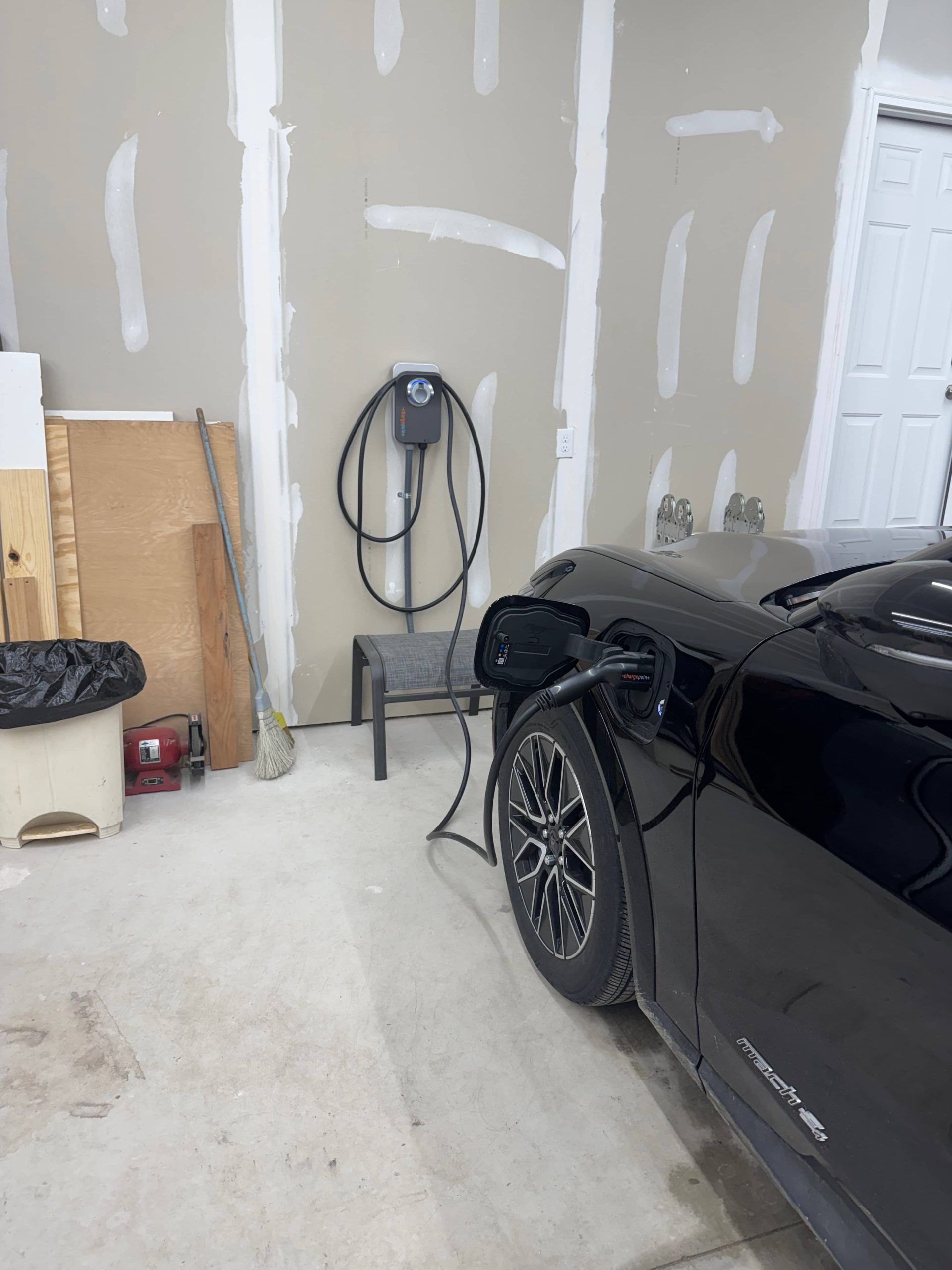
The charger typically mounts on the garage wall near where you park, positioned so the charging cable reaches your vehicle's charge port without stretching, or on an exterior wall or post if you park in a driveway with the conduit and wiring protected from physical damage.
What happens if my electrical panel lacks capacity for the charger circuit?
Panel upgrades involve replacing your existing panel with a higher-capacity model or adding a subpanel dedicated to the EV charger, which increases installation cost but allows safe operation without overloading your electrical service.
MJM Electric Inc evaluates your electrical system and installs charging stations matched to your vehicle specifications and parking layout. Contact us to schedule an electrical assessment and receive a detailed quote based on your property's wiring configuration.